How systematic A/B testing grew PostNL's B2B revenue by 27%
Responsibilities
UX Research & Testing
Test Roadmap & Prioritization
Metrics Definition
Cross-team Alignment
Timeline
Q1 2024 – Q1 2026
Client
PostNL
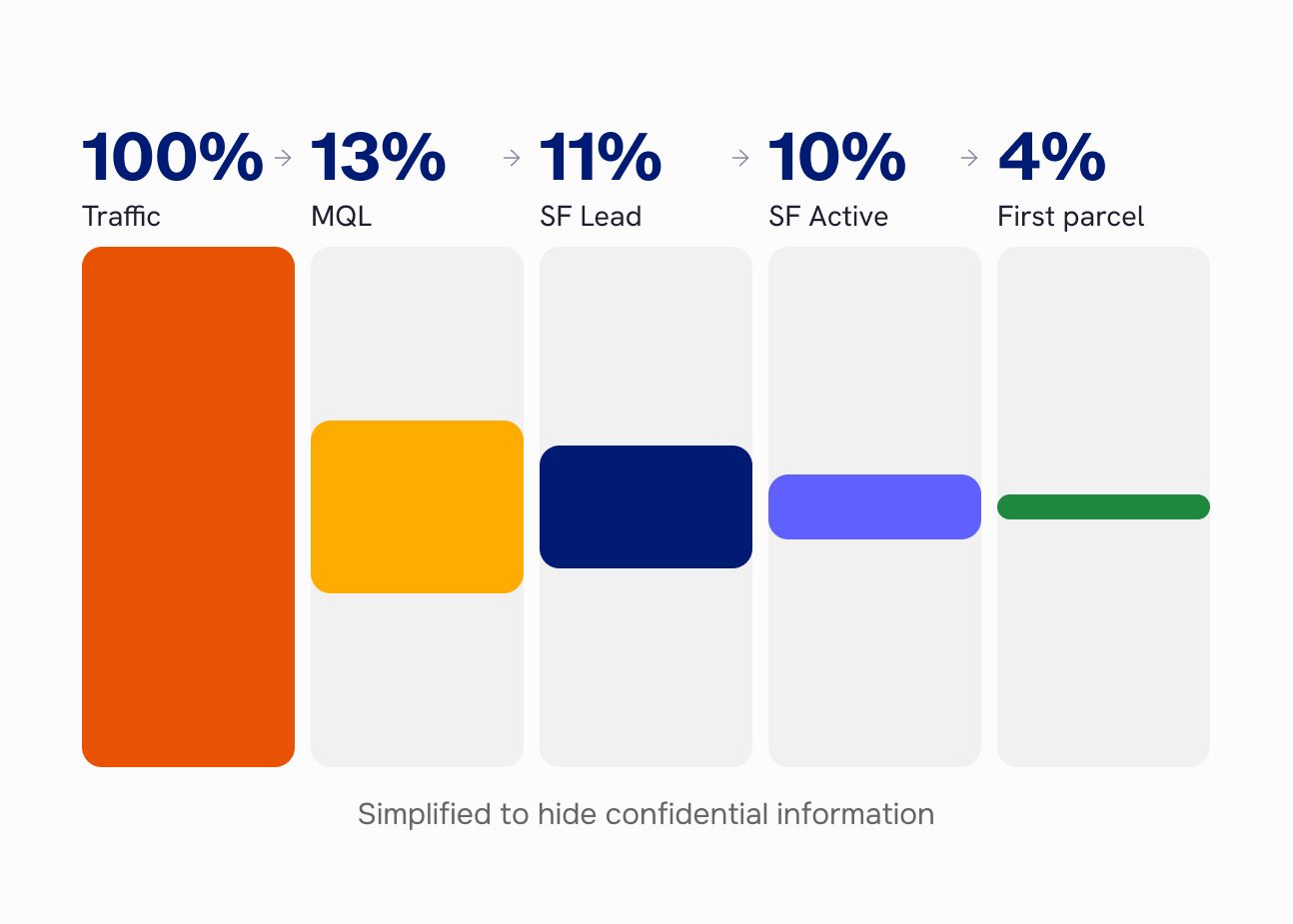
The redesigned onboarding flow delivered measurable business impact and strategic value:
Improved from 4.7% to 8.4%
Avg. from 3.25 days to 1 day
Projected revenue lift from increased conversions and customer retention
PostNL's B2B customer acquisition was stagnant. Three product teams ran isolated experiments with no shared roadmap, leading to:
Led experimentation strategy for PostNL's B2B acquisition team. Coordinated with engineering, marketing, and CRO to prioritize tests, analyze results, and scale wins across the funnel.
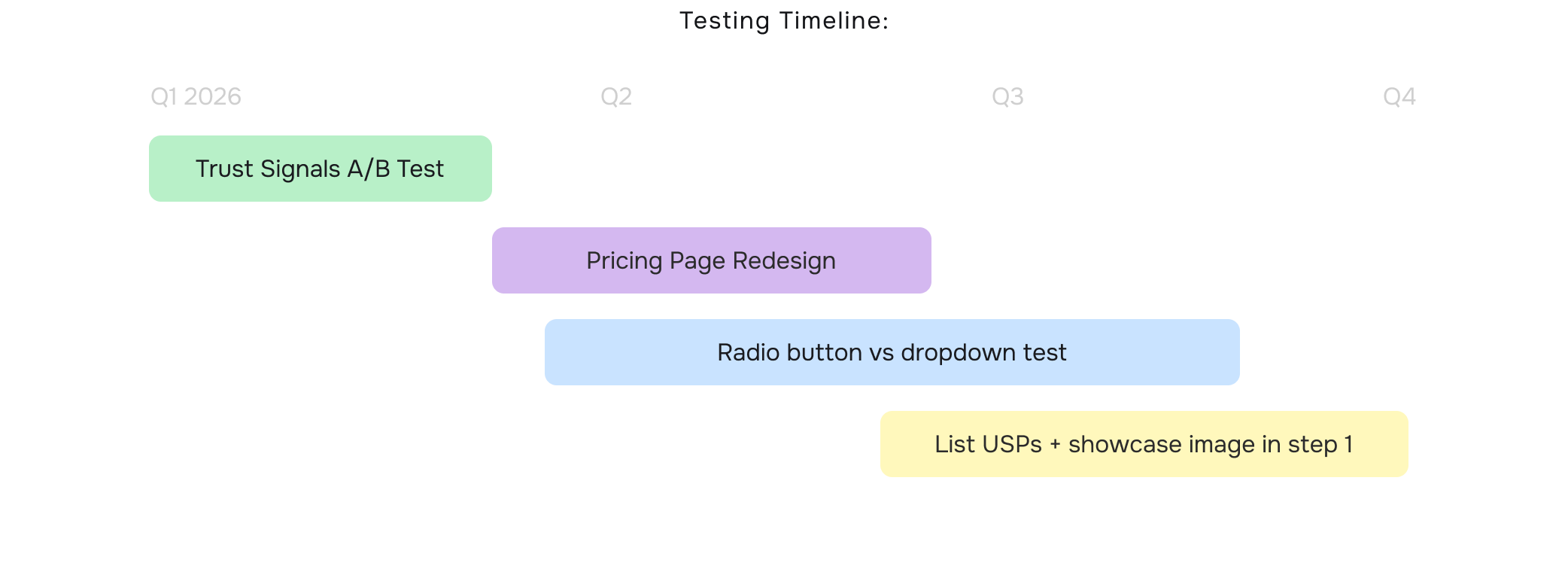
Built quarterly roadmap prioritizing experiments by business impact and dev risk. Coordinated bi-weekly planning to align stakeholders.
Trade-off: Delayed high-risk pricing tests to Q3. First proved low-risk UX wins (73% conversion lift) before asking for heavy dev investment.
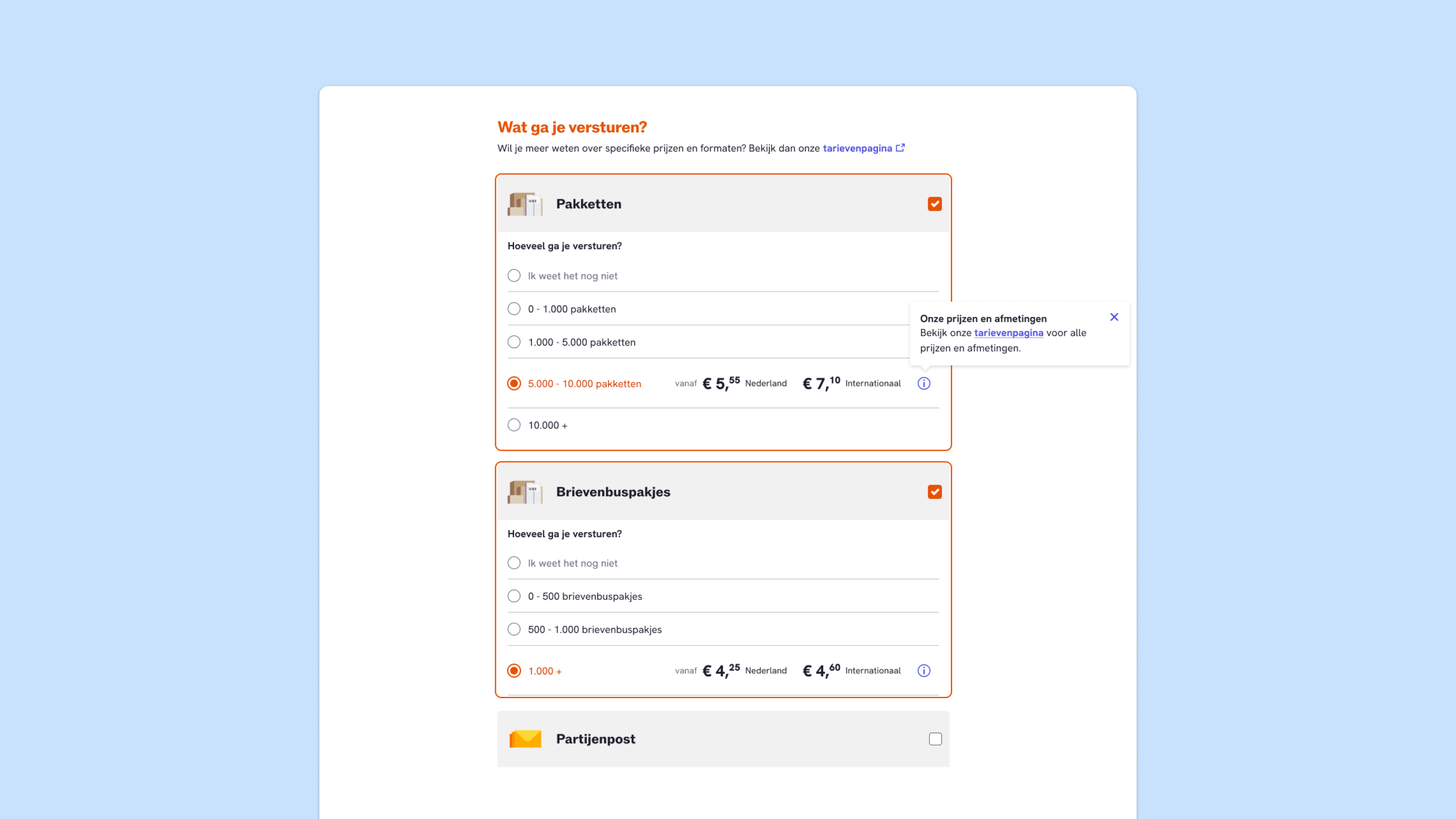
Tested radio buttons instead of dropdown for package volume selection—hypothesis: more visible options = higher completion.
Result: No lift. Users already understood dropdown. Radio buttons added visual clutter without improving clarity. Reverted after 2-week test.
Learning: Not every UX pattern improvement translates to conversion gains. Test assumptions.
Designed 3 customer segments (high/mid/SMB). Testing showed mid-volume behaved like SMB.
Decision: Consolidated to 2 segments (>10k vs. <10k packages) for faster dev and clearer messaging. Option to split later if needed.
Tension: 60% ad traffic from mobile, but PostNL's tools were desktop-centric.
Decision: Risk analysis showed mobile drop-off cost €200K+ annually. Prioritized mobile while maintaining desktop parity.
Result: +89% mobile conversion, -2% desktop (acceptable trade-off).
Key product improvements spanning strategic segmentation, flow optimization, and preference capture.
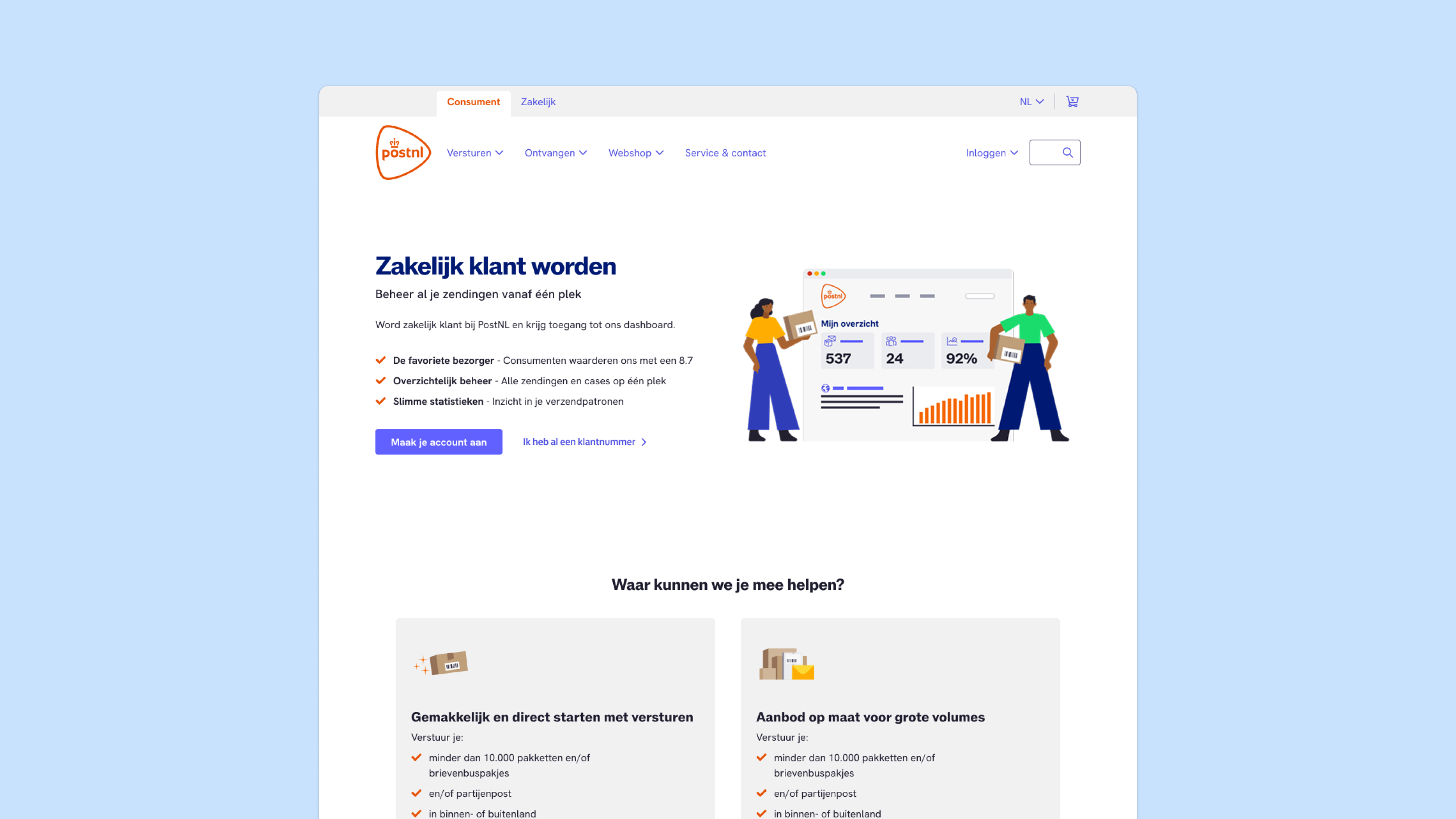
Tested 3 customer segments initially, but data showed mid-volume behaved like SMB. Simplified to 2 segments (>10k vs. <10k packages annually) to reduce complexity and speed dev. High-volume prospects now receive immediate sales outreach; SMBs get fast digital self-service.
Results:
Reducing Friction Through Step Elimination
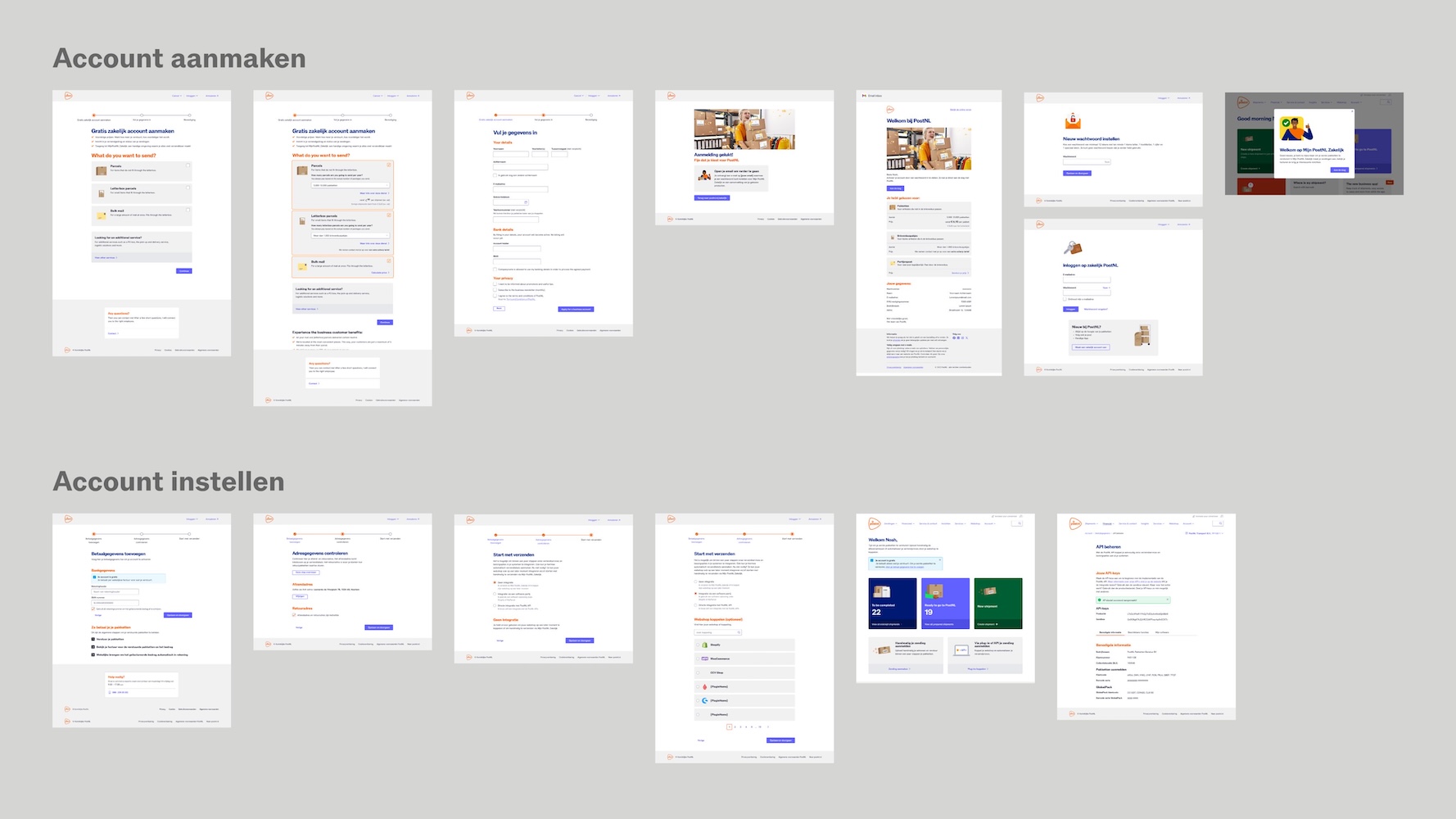
Completely redesigned the account creation process, reducing required steps from 18 to 9 while maintaining all essential verification and setup requirements. Combined related actions into logical groupings and eliminated redundant data entry points that were causing customer abandonment.
Results:
Visited clients in their natural work environments to observe real PostNL platform usage. Uncovered critical gaps between designed workflows and actual user behavior that desk research missed.
Systematic testing of layouts, copy, and interaction patterns to validate design decisions. Analyzed DHL and DPD competitor flows for differentiation opportunities.
Created and tested interactive prototypes with target users throughout iterations. Identified friction points before development, reducing costly rework.
60% of traffic was mobile, but I optimized desktop first due to legacy stakeholder focus. Should've led with mobile data from day one—would've prioritized differently and shipped faster.
Spent too much time in status meetings explaining the 'why'. A clear document would have freed 5+ hours/week for actual design/dev work.
We often ran tests one after another. In hindsight, could've tested multiple non-overlapping flows simultaneously. Would've saved 2 months and increased velocity.