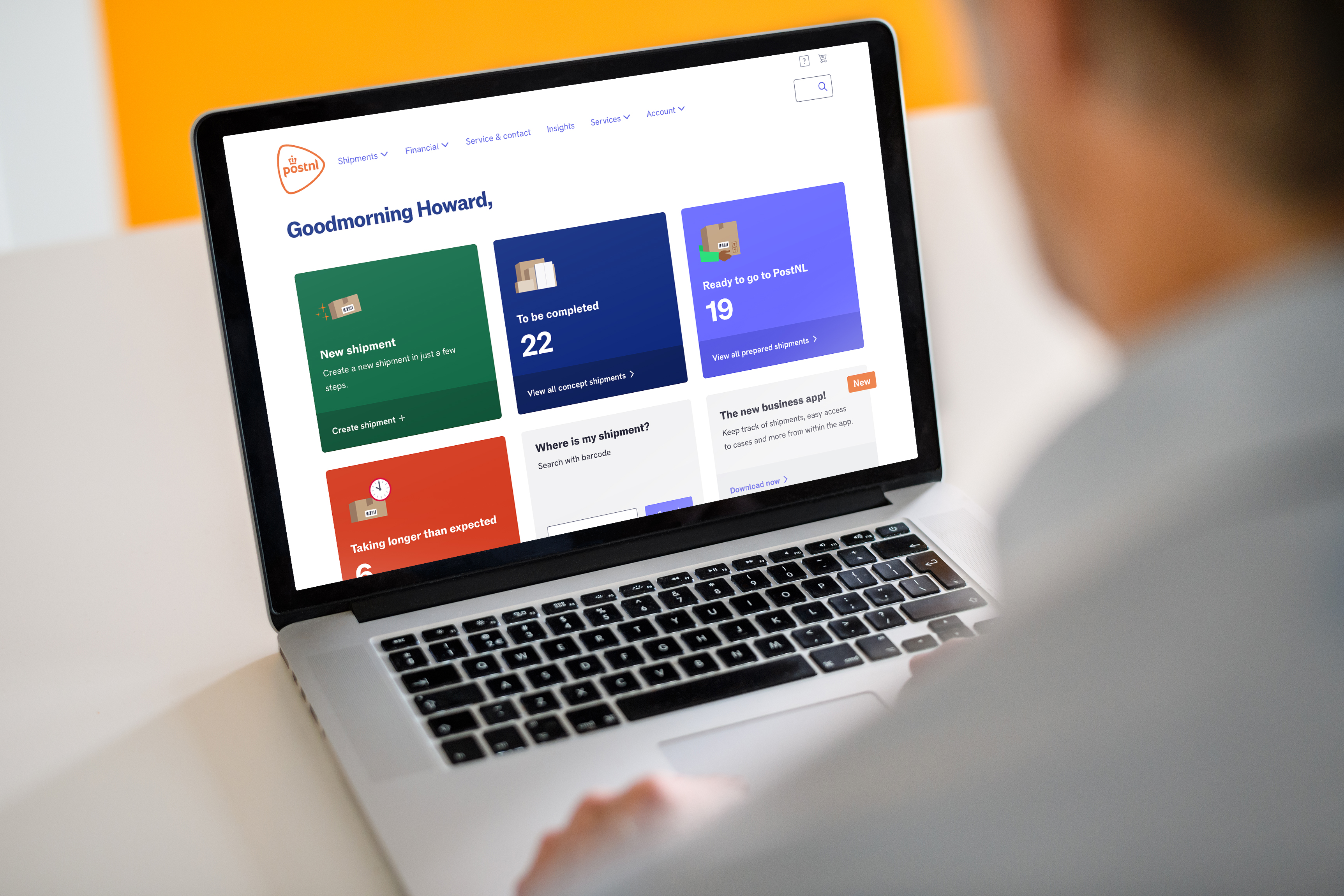
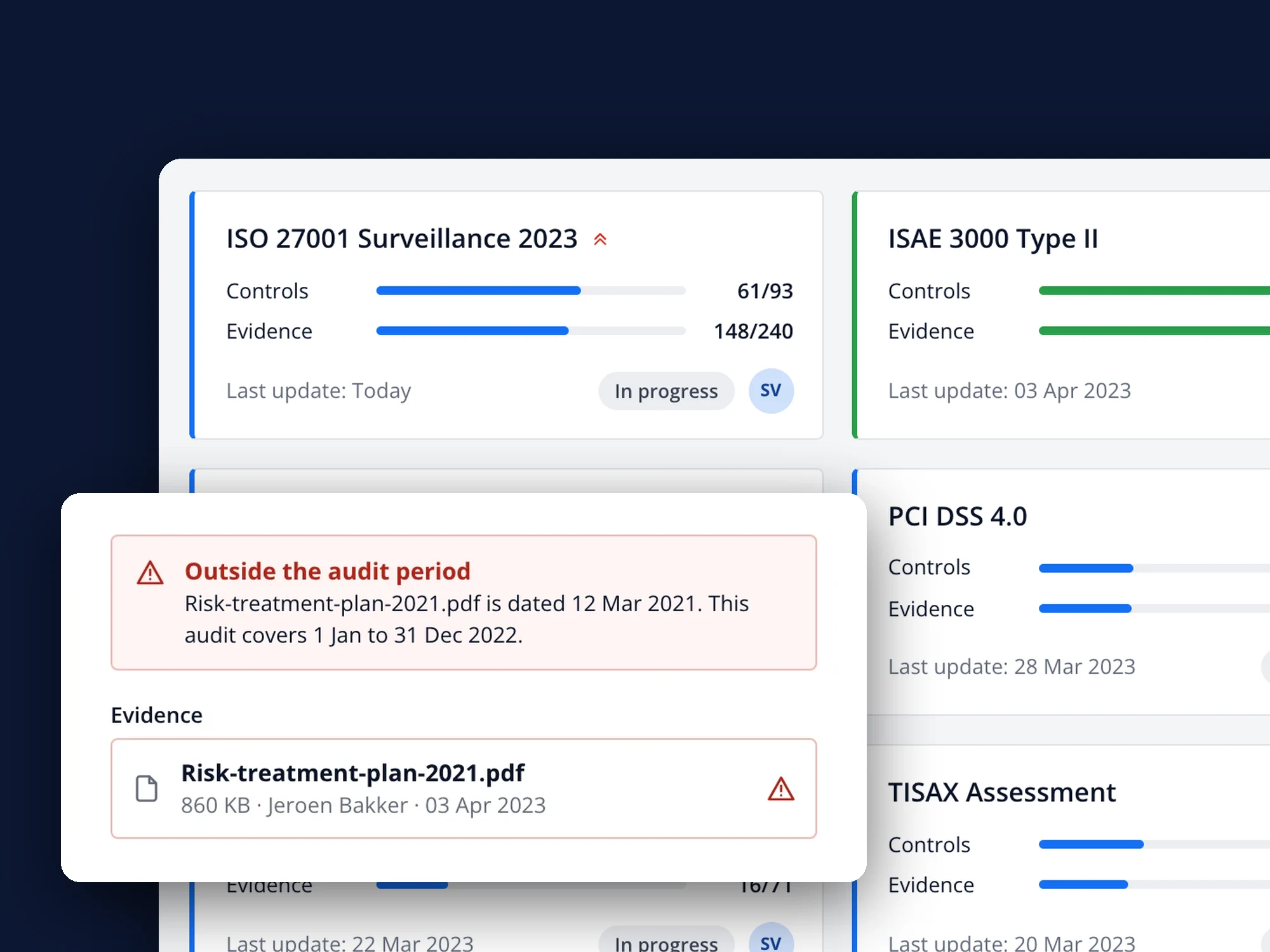
How optimized discovery flows generated €5M in new B2B revenue for PostNL
Responsibilities
UX Research & Testing
Test Roadmap & Prioritization
Metrics Definition
Cross-team Alignment
Timeline
Q1 2024 – Q1 2026
Client
PostNL

Accelerating testing culture and prioritising user needs to create a more conversion optimised flow while reducing user friction to find the relevant content.
Generated new revenue channel with €800K investment
Increased from 1 test per 2 months to 3-4 tests per month
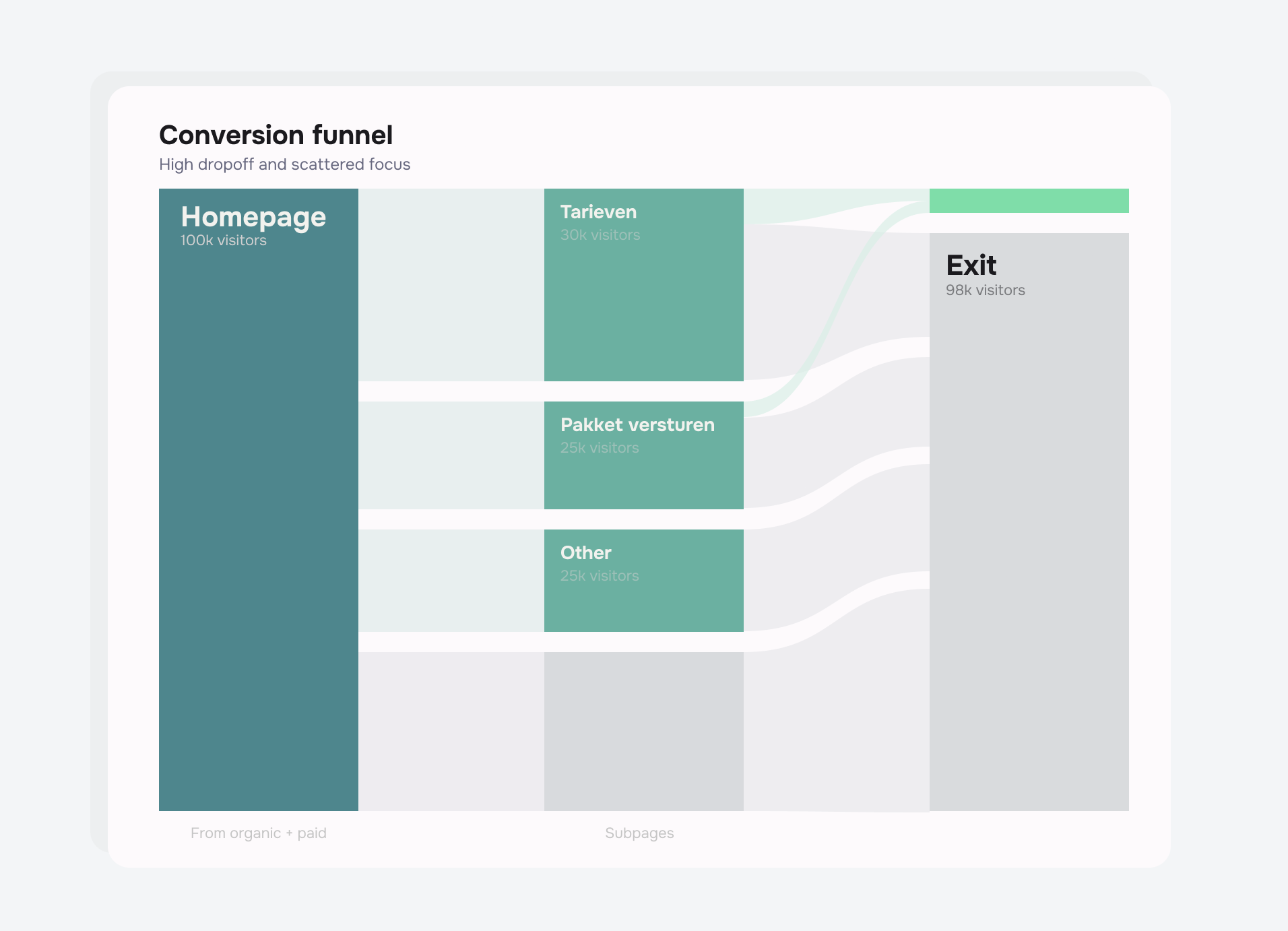
Reduced dropoffs by clearer (volume based) user segmentation
Lack of focus on real customer needs and fragmented optimization efforts hindered by the status quo.
Using in-field research, interviews, and prototypes to support design decisions
Data-driven page optimization and systematic testing across B2B customer acquisition touchpoints
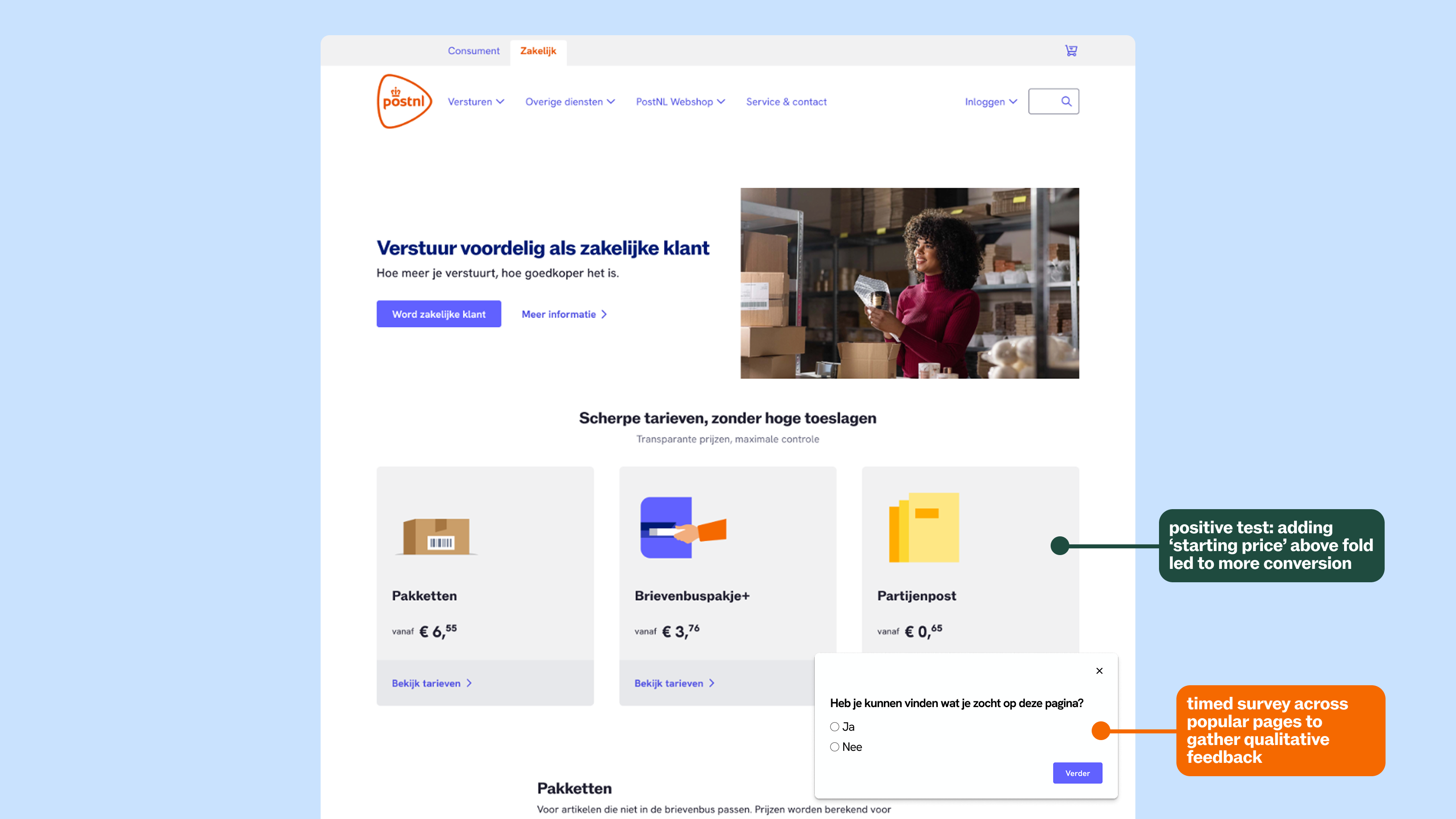
To balance conversion optimization with user satisfaction, I helped implement timed on-page surveys asking users if they found what they were looking for (linked to NPS). I analyzed these qualitative insights to identify usability issues and prioritize high-impact opportunities. Based on this, I proposed A/B testing ideas, which were reviewed in CRO meetings with the tester and PO to guide implementation.
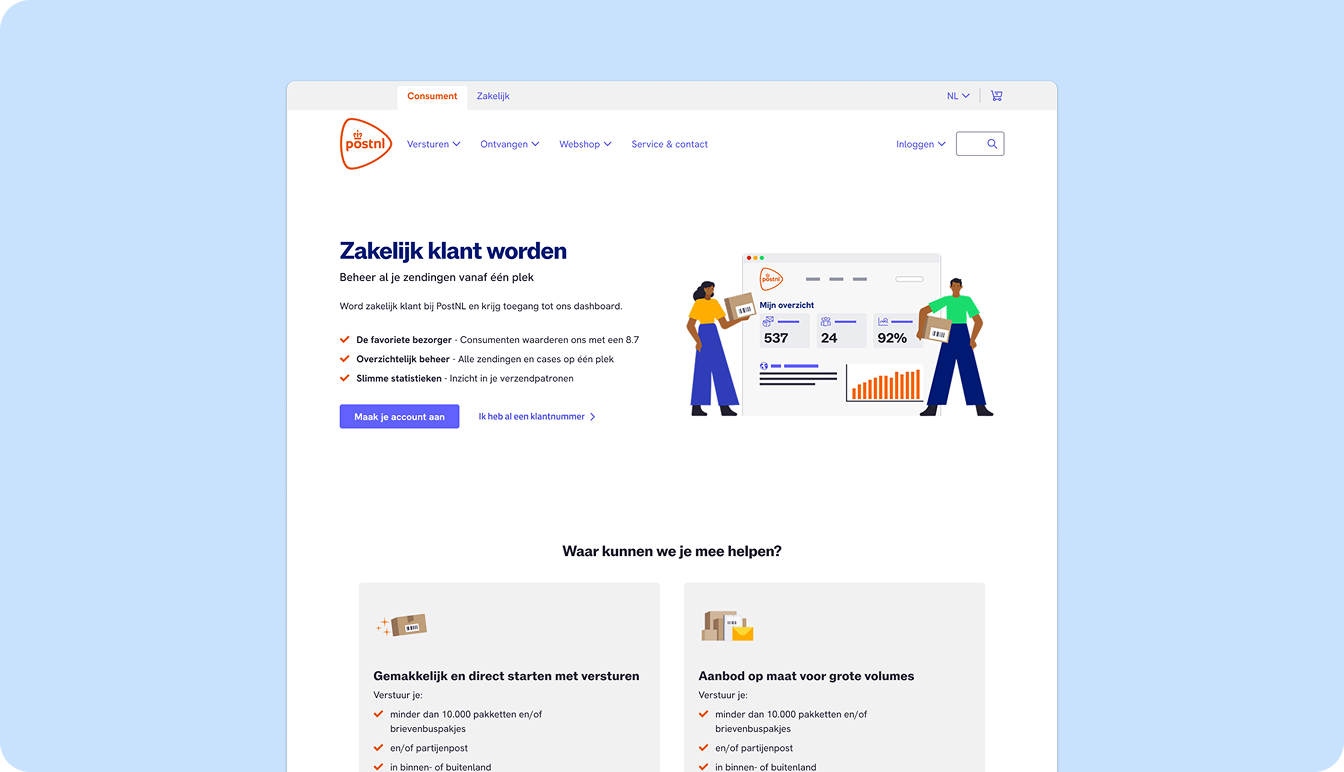
The question: How should we route different business customers through the acquisition flow?
What the data showed: We originally designed for 3 segments, but behavioural data revealed that mid-volume customers navigated and converted identically to SMBs — making the distinction redundant in practice.
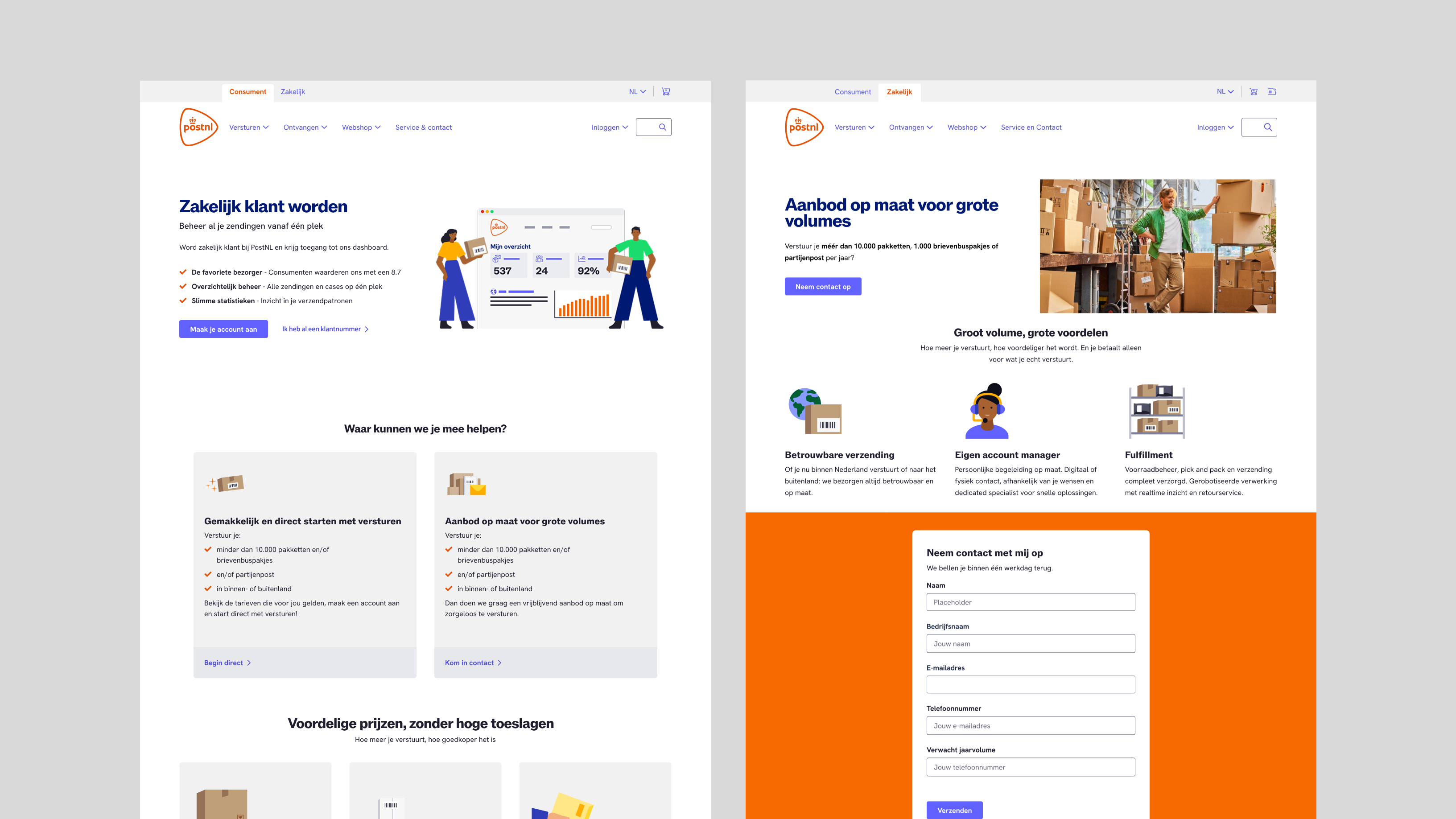
The decision: Simplified to 2 segments based on annual volume: above or below 10,000 packages. High-volume customers were routed to sales outreach; SMBs to digital self-service.
Why it mattered: The simpler model wasn’t a compromise — it was more accurate. Data reduced scope rather than adding to it.
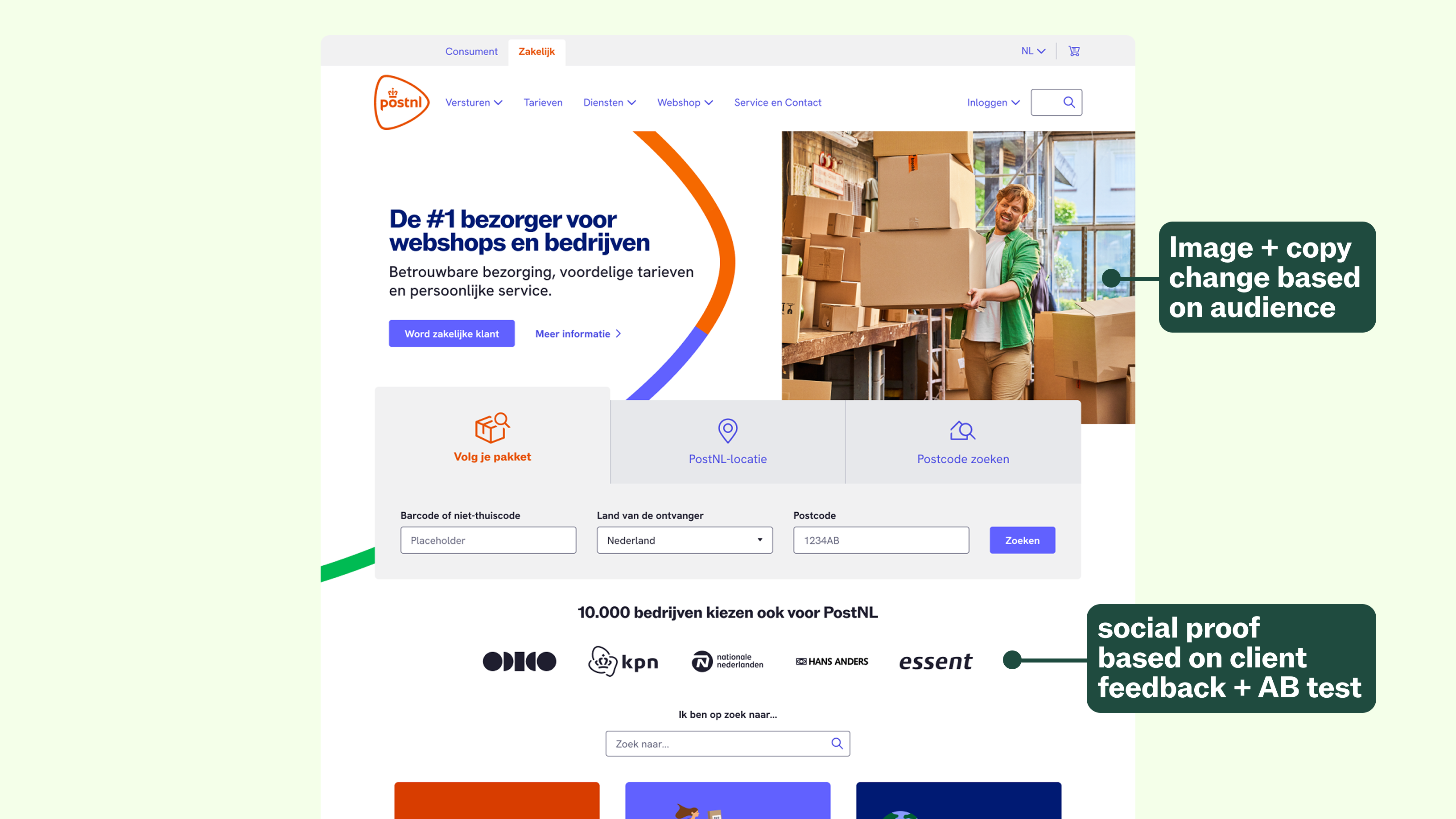
The question: How could we better direct non-customers to relevant content on the business homepage?
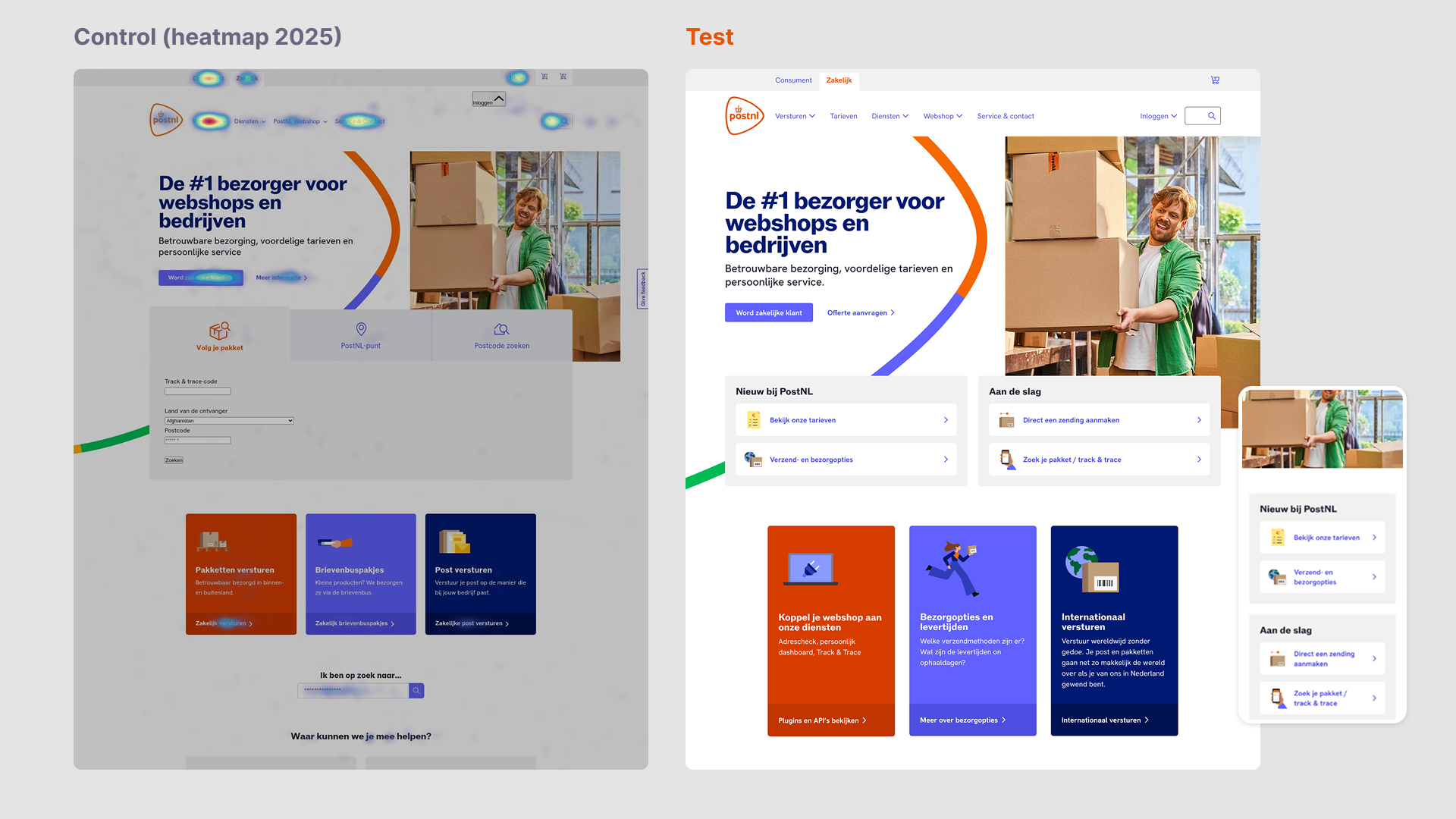
What the data showed: Over 6 A/B tests on the existing track & trace widget were inconclusive. Heatmaps and navigation analysis revealed that business visitors — the primary target — weren’t engaging with it at all. The widget was serving the wrong audience.
The decision: Replaced the widget with intentional quicklinks segmented by user need, surfacing the most relevant paths for new business visitors rather than continuing to optimise something they didn’t use.
Why it mattered: Inconclusive results sometimes mean the hypothesis is wrong, not the execution. Reframing the question unlocked a result that months of A/B testing couldn’t.
The zakelijk quicklinks test showed strong engagement signals, which led to validating the same pattern on the consumer side. Tested in two variants, the stronger version showed +56.5% CTR to underlying pages and +9.2% conversion uplift, generating a business case of €113,308. A good example of a B2B insight travelling into consumer design — the reverse of the usual direction.
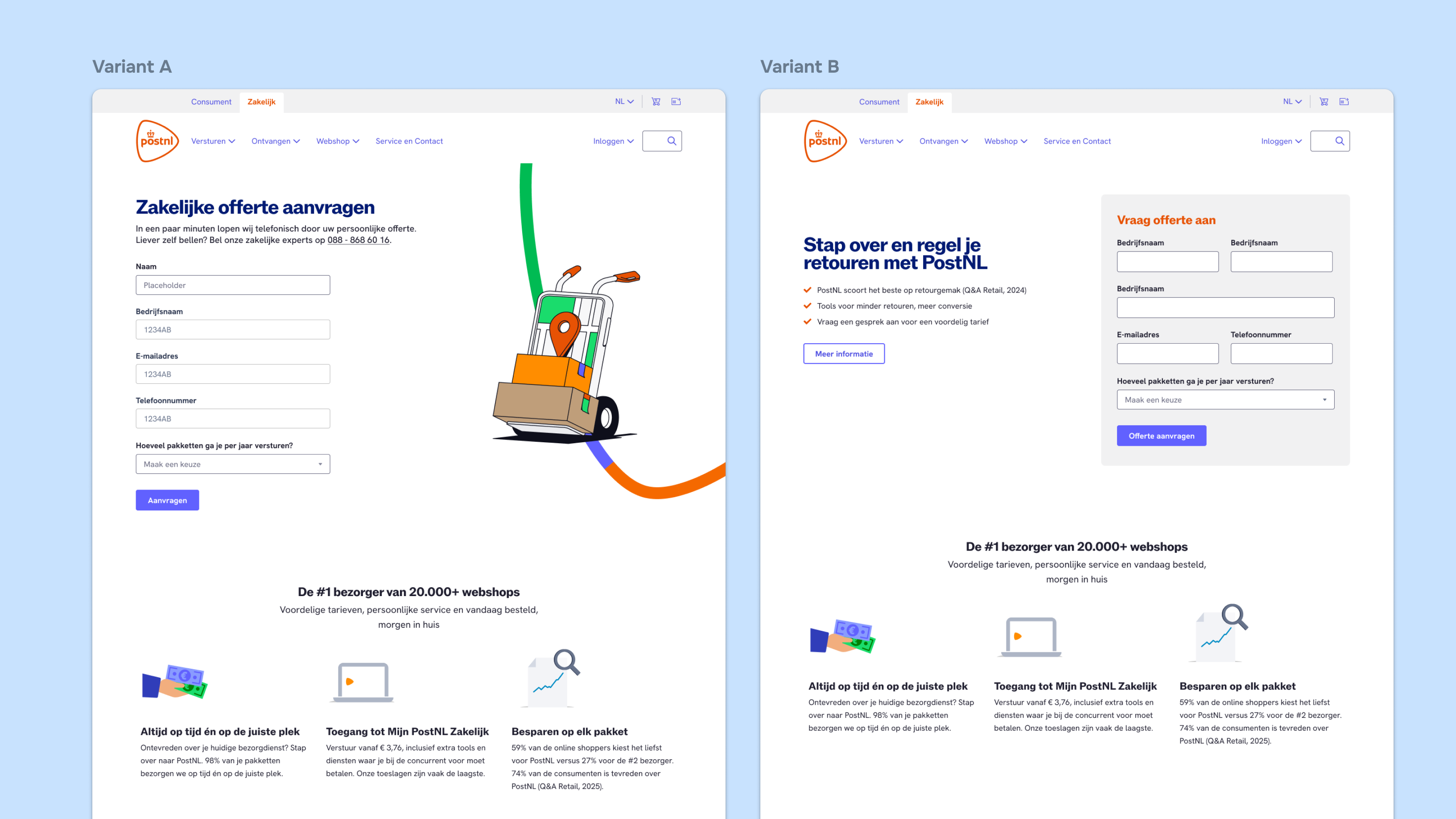
Optimised the offer form by moving it to the top of the page (instead of in the footer) and testing out various designs (see example). This brought a noticeable conversion improvement, leading to us integrating the new pattern with our design system team.
2025 Finalist
Recognized for transforming marketing culture through collaboration, systematic testing, and data-driven decision making ("Cultuur Bekroond" Category)